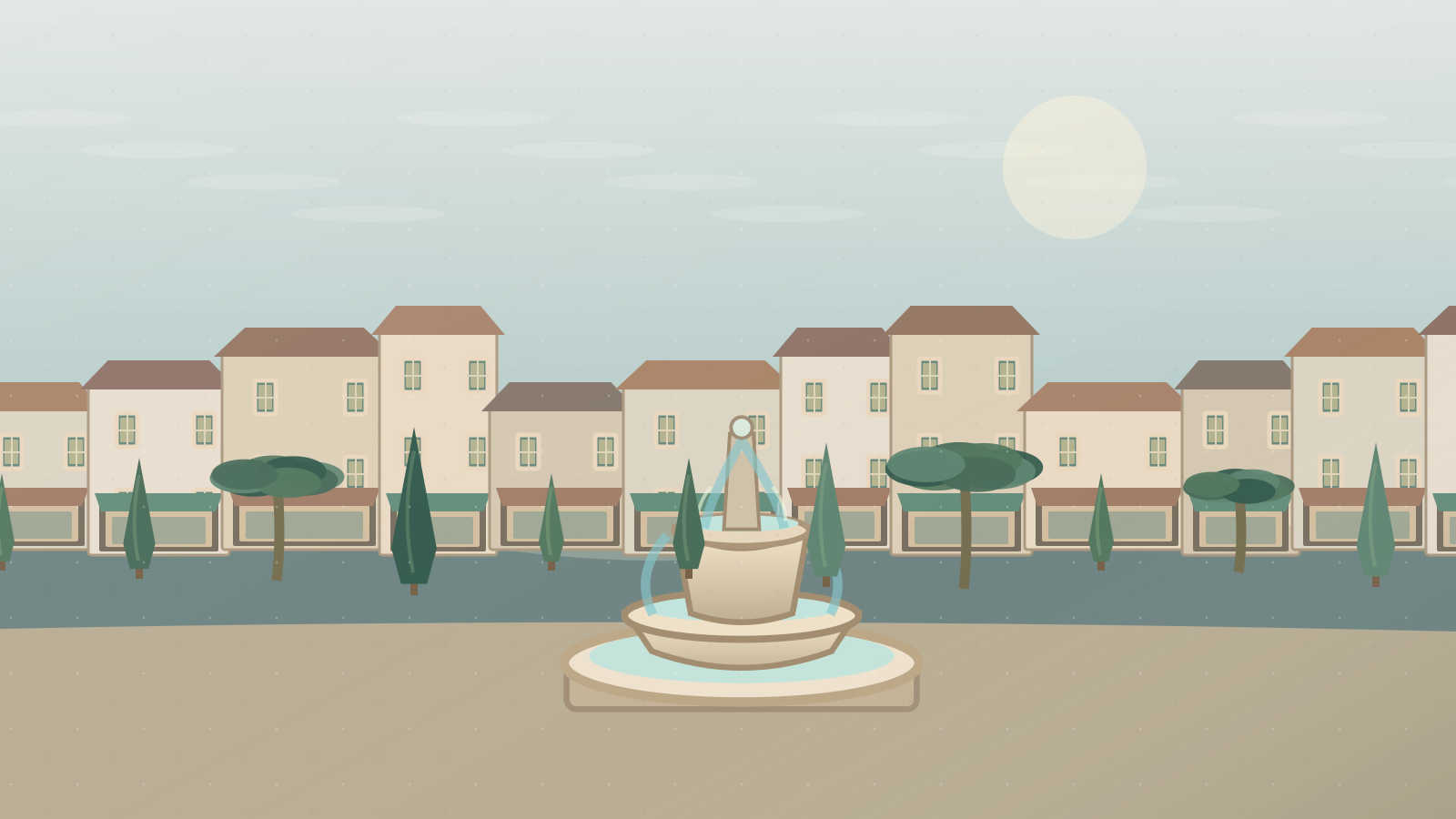
The fountain was never the loudest thing in the square. Shopkeepers called to their neighbours over it. Carts rattled across the paving. Someone was always hammering a loose hinge or trying to persuade a customer that a second colour suited them better. The water simply kept running, so dependable that people stopped listening for it.
Below the ordinary splash was a second kind of movement. Light travelled through the water and along channels cut into the stone. It was useful, beautiful and finite. That last fact would prove the easiest to forget.
The water beneath Doreavinea carried a light called Luminea. It shone in springs and underground channels. The founders learned to use its energy to light their streets, run their workshops and power Spark and Orrean. The land slowly renewed both the water and the light, but it could not replace them as quickly as people could use them.
The fountain did more than mark the centre of the city. It helped control the flow. Beneath its stone basin, channels carried Luminea out to the districts. Other channels brought water and renewed light back.
People could help renew Luminea too. When someone repaired a broken tool, made something useful or created something that brought another person joy, fresh light could gather in the water nearby. It travelled back through the channels, ready to help with the next task.
A wooden bird could matter as much as a better hinge. An experiment could teach its maker something even if the invention failed. Nobody had to sell a thing for it to have value.
But making a thousand unwanted birds used energy without necessarily giving much back. And even good work could not make water flow through a broken channel.
At the top of the fountain sat a small, dark fitting with many flat faces. It had been built to receive signals from across the network. In time, people forgot why it was there and began to treat it as an ornament.
The earliest settlements had their own springs and reserves. They shared power with one another and returned light to the fountain. Later, more and more districts began relying on the central supply. Some of the channels that brought light back were neglected. Others were closed to make room for new work.
The city still shone, so few people worried.
Founders earned, saved and exchanged Luminea. They used it for tools, shops and shared projects. For a while, enough people remembered to wait when the springs needed time to recover.
Then the city began growing faster than the land could replenish it.